

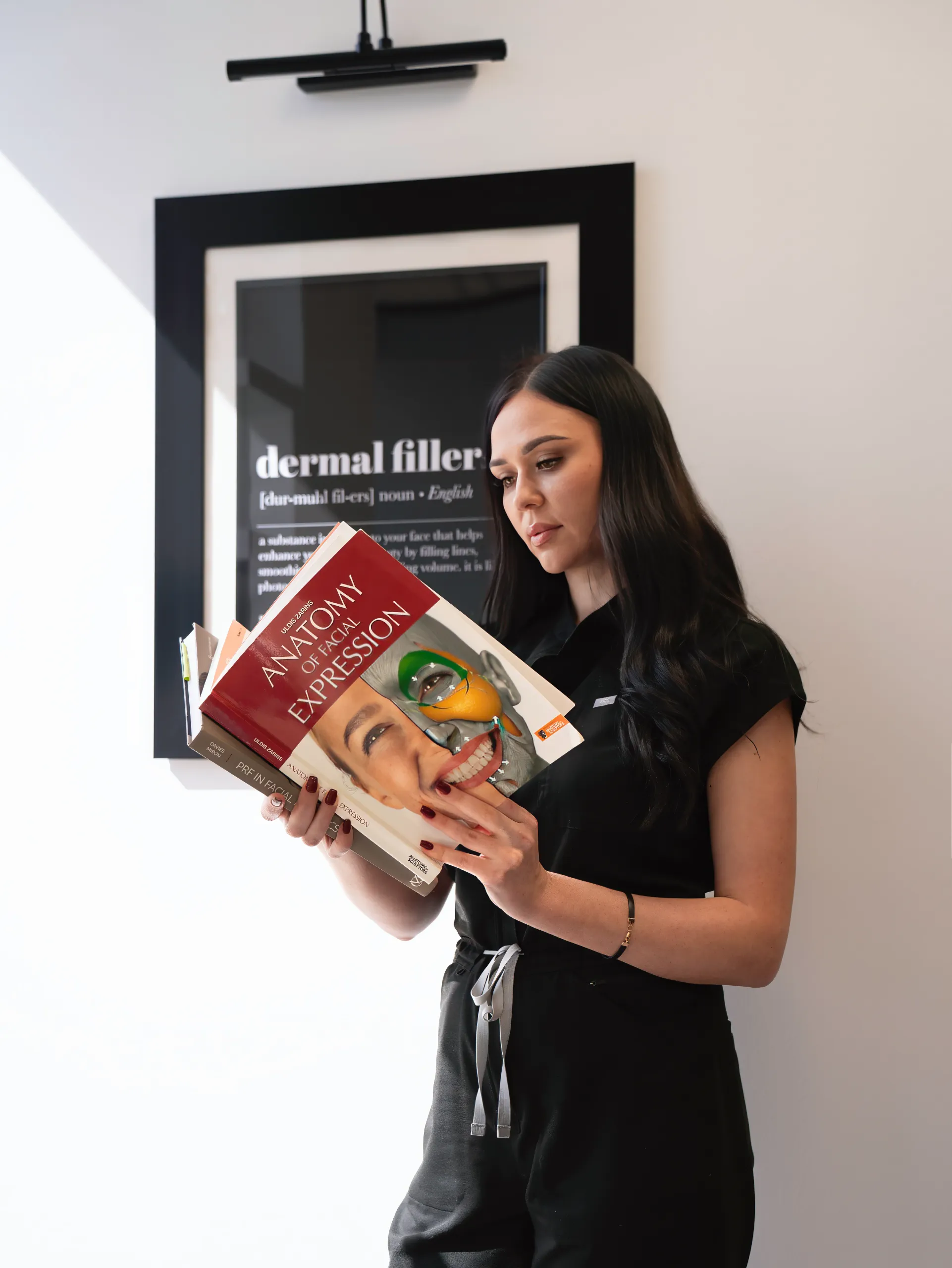
How to Become an Injector in Texas
From Healthcare Professional to Confident Aesthetic Injector
If you’ve ever dreamed of combining medicine, artistry, and entrepreneurship, a career in aesthetic medicine may be the perfect fit.
More nurses, nurse practitioners, physician assistants, and physicians are entering aesthetics than ever before, drawn by the opportunity to create natural-looking results, build meaningful patient relationships, and develop rewarding careers in one of the fastest-growing specialties in healthcare.
But becoming a successful injector requires more than simply learning where to place a needle.
It requires education, hands-on experience, mentorship, clinical judgment, and a deep understanding of facial anatomy and patient safety.
At Derma Theory Aesthetics Academy, we help medical professionals bridge the gap between healthcare and aesthetic medicine through personalized training, live model experience, and real-world mentorship.
The Truth About Becoming an Injector
One of the biggest misconceptions in aesthetics is that a weekend course will instantly make someone an expert injector.
The reality is that becoming a great injector is a journey.
The most successful injectors invest in anatomy education, hands-on experience, mentorship, business knowledge, and continuous learning throughout their careers.
Training is where the journey begins—not where it ends.
Who Can Become an Injector in Texas?
Injectable aesthetic treatments such as Botox®, dermal fillers, PRF, and biostimulators must be performed by appropriately licensed medical professionals.
Eligible providers may include:
✓ Registered Nurses (RN)
✓ Nurse Practitioners (NP)
✓ Physician Assistants (PA)
✓ Physicians (MD/DO)
✓ Licensed Vocational Nurses (LVN) working under appropriate supervision
Requirements may vary depending on your license type and practice structure.
Step 1: Build Your Medical Foundation
Before pursuing aesthetic injections, you must hold an appropriate healthcare license such as RN, NP, PA, MD, DO, or another eligible license permitted under applicable regulations.
A strong medical foundation is essential because aesthetic medicine involves patient assessment, anatomy, treatment planning, and complication management.
Step 2: Master Facial Anatomy & Safety
Every injector should understand facial muscles, blood vessels, fat compartments, danger zones, facial aging patterns, and facial proportions.
Anatomy knowledge directly impacts patient safety and treatment outcomes.
Step 3: Gain Hands-On Experience
Online education can be valuable, but hands-on training is essential.
Look for programs that include:
✓ Live model experience
✓ Direct instructor supervision
✓ Consultation training
✓ Injection techniques
✓ Complication recognition
✓ Emergency management protocols
Hands-on experience bridges the gap between theory and real-world patient care.
Step 4: Develop an Aesthetic Eye
The best injectors understand that aesthetics is about more than placing product.
Successful injectors learn how to assess facial structure, create customized treatment plans, build patient trust, and deliver natural-looking results through thoughtful treatment planning.
Step 5: Learn from Experienced Injectors
Mentorship helps providers build confidence, refine technique, discuss cases, improve outcomes, and avoid common mistakes.
Continuous learning is one of the most valuable investments an injector can make.
Step 6: Build a Successful Aesthetics Career
Clinical skills are only part of the equation.
Successful injectors also understand consultations, marketing, patient retention, social media, pricing, and practice growth.
Understanding both clinical and business fundamentals can significantly accelerate your success in aesthetics.
More Than an Injector Course
The best injectors are not simply trained to inject.
They understand facial anatomy, communication, treatment planning, and facial harmony.
Great injectors know when to treat, when not to treat, and how to create natural-looking results that enhance a patient’s unique features.
Technical skill matters. Clinical judgment is what separates good injectors from exceptional ones.
Do I Need a Medical Director in Texas?
Many aesthetic practices in Texas operate under physician oversight through a Medical Director relationship.
Requirements vary depending on your license type, practice structure, and current regulations.
Why Train at Derma Theory Aesthetics Academy?
At Derma Theory, we believe the best injectors are built through mentorship, experience, and intentional practice.
Students receive personalized instruction, hands-on training with live models, and practical education designed to bridge the gap between theory and real-world practice.
Led by Victoria Derdari, APRN, FNP-C, our programs focus on anatomy, patient safety, facial assessment, treatment planning, natural-looking results, and business growth.
Our goal is simple: to help providers develop confidence, clinical judgment, and the skills necessary to build successful careers in aesthetic medicine.
Ready to Start Your Injector Journey?
Explore our training programs or contact Derma Theory Aesthetics Academy to learn more about upcoming injector training courses in Houston, Texas.
